
Our Way of Working
March 10, 2022 2025-06-27 15:04Our Way of Working
Our Way of Working
Home / Our Way of Working
The principles that guide and underpin RTLB practice
Principles
RTLB Cluster 21 work to uphold the Treaty of Waitangi including by:
RTLB Cluster 21 work to understand and uphold obligations to the articles in Te Tiriti: RTLB
practice demonstrates Te Tiriti o Waitangi in action
Our Way of Working
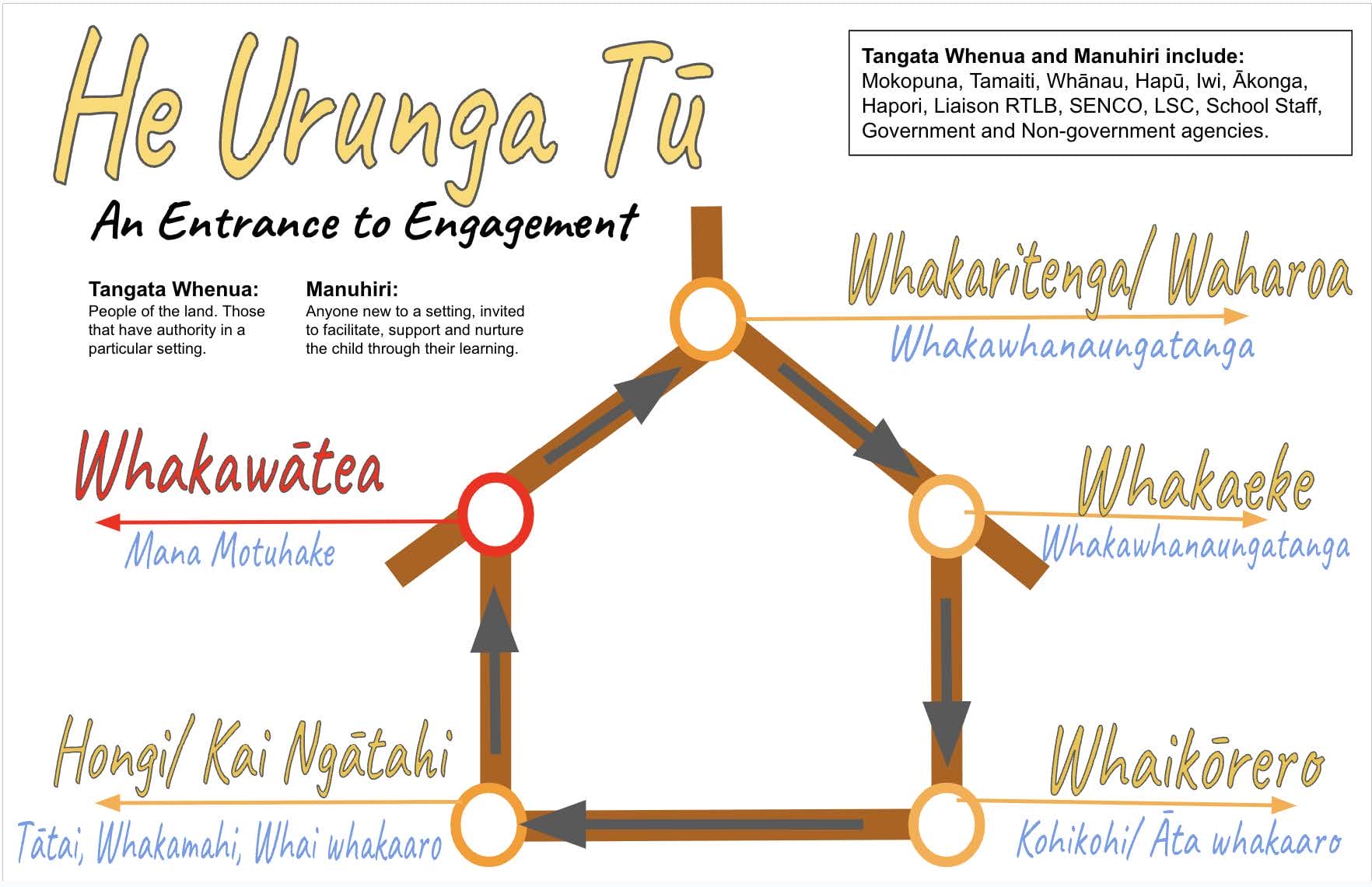
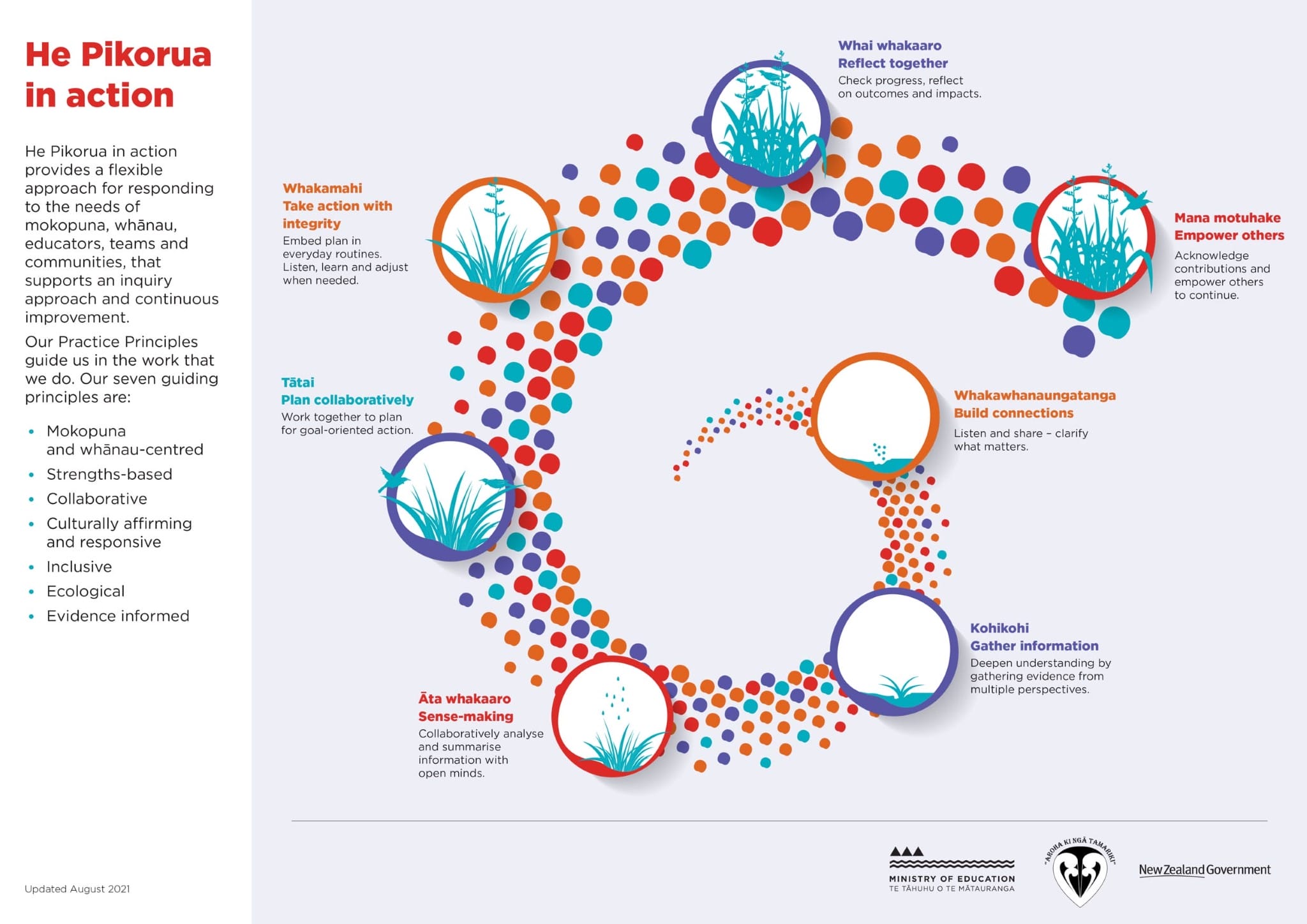
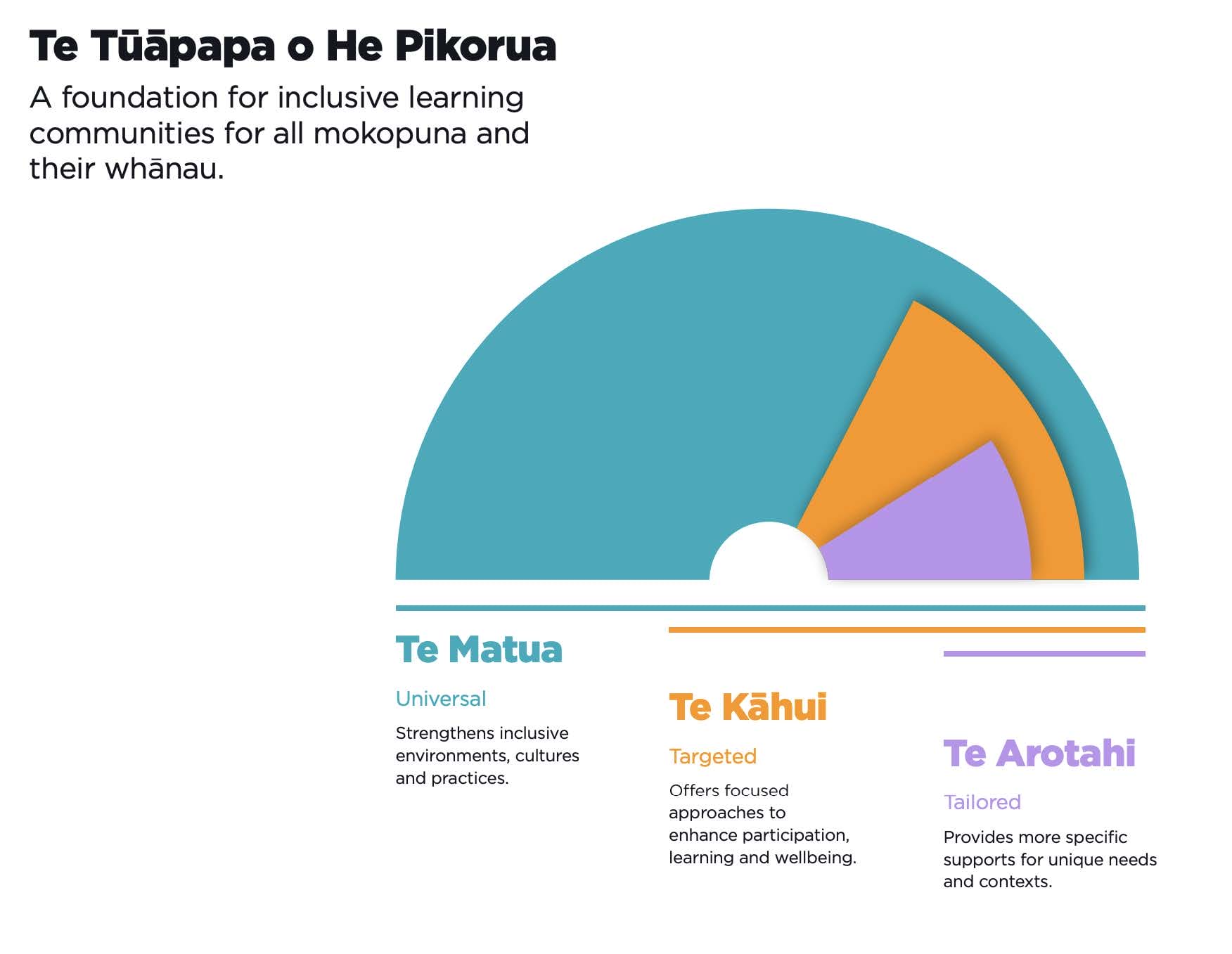
RTLB in Cluster 21 have embedded He Urunga Tū and Te Tūāpapa o He Pikorua as our way of working
He Urunga Tū - An Entrance to Engagement
He Urunga Tū is a culturally responsive framework that guides RTLB professional practice and is underpinned by ‘tino rangatiratanga’ (self determination), for the mokopuna, whānau, kaiako and kura. As RTLB and Learning Support it is important to remember that we are manuhiri who are invited to facilitate, support and nurture the child through their learning journey. We aspire to treat all as rangatira.
Professional and personal integrity throughout this process promotes trust and is an integral part of success within this framework. The He Urunga Tū framework enables RTLB to be effective, inclusive, culturally responsive and safe in their practice. It guides and supports RTLB to facilitate the process in a manner that is respectful and professional and maintains positive working relationships.
RTLB Cluster 21 Potaka ki Mohaka has included Te Waharoa Liaison RTLB Clarification as the starting place within He Pikorua to reflect He Urunga Tū – the gateway to engagement.
Narrative
Each mokopuna, whānau, kaiako and kura ‘own’ their story. Through these narratives we are able to understand how we can be of service as RTLB.
Learn more about this
Ngā Whakaritenga / Waharoa / Whakaeke
RTLB are manuhiri and only enter if invited. Wait for the karanga, then work through what is wanted and how you can be of service.
It is at this time we are reaching out to whānau, and establishing the tikanga and rules of engagement. This tikanga is determined by mokopuna, whānau and kaiako.
Whaikōrero
A time of gathering and building a holistic picture that includes the voice of all members of the team. Collecting data in a respectful strength based manner and being transparent when reporting back to the team.
Hongi / Kai Ngātahi
Setting goals collaboratively and meeting as a team. An agreement by all stakeholders to review our progress as a team. To remember when setting goals the hauora of the whole tamaiti - Te Whare Tapa Wha.
Whakawātea
Whakawātea is a shared event, a celebration that we take time to complete together.
NarrativeEach mokopuna, whānau, kaiako and kura ‘own’ their story. Through these narratives we are able to understand how we can be of service as RTLB. |
|||
Ngā Whakaritenga / Waharoa / Whakaeke |
Whaikōrero |
Hongi / Kai Ngātahi |
Whakawātea |
|
RTLB are manuhiri and only enter if invited. Wait for the karanga, then work through what is wanted and how you can be of service.
It is at this time we are reaching out to whānau, and establishing the tikanga and rules of engagement. This tikanga is determined by mokopuna, whānau and kaiako.
|
A time of gathering and building a holistic picture that includes the voice of all members of the team. Collecting data in a respectful strength based manner and being transparent when reporting back to the team.
|
Setting goals collaboratively and meeting as a team. An agreement by all stakeholders to review our progress as a team. To remember when setting goals the hauora of the whole tamaiti – Te Whare Tapa Wha
|
Whakawātea is a shared event, a celebration that we take time to complete together.
|
RTLBs wear two ‘hats’ in Cluster 21:
‘Liaison RTLB’ work and ‘Allocated RTLB’ case work. RTLB follow a structured process which includes three main components:
01. Pre request for support
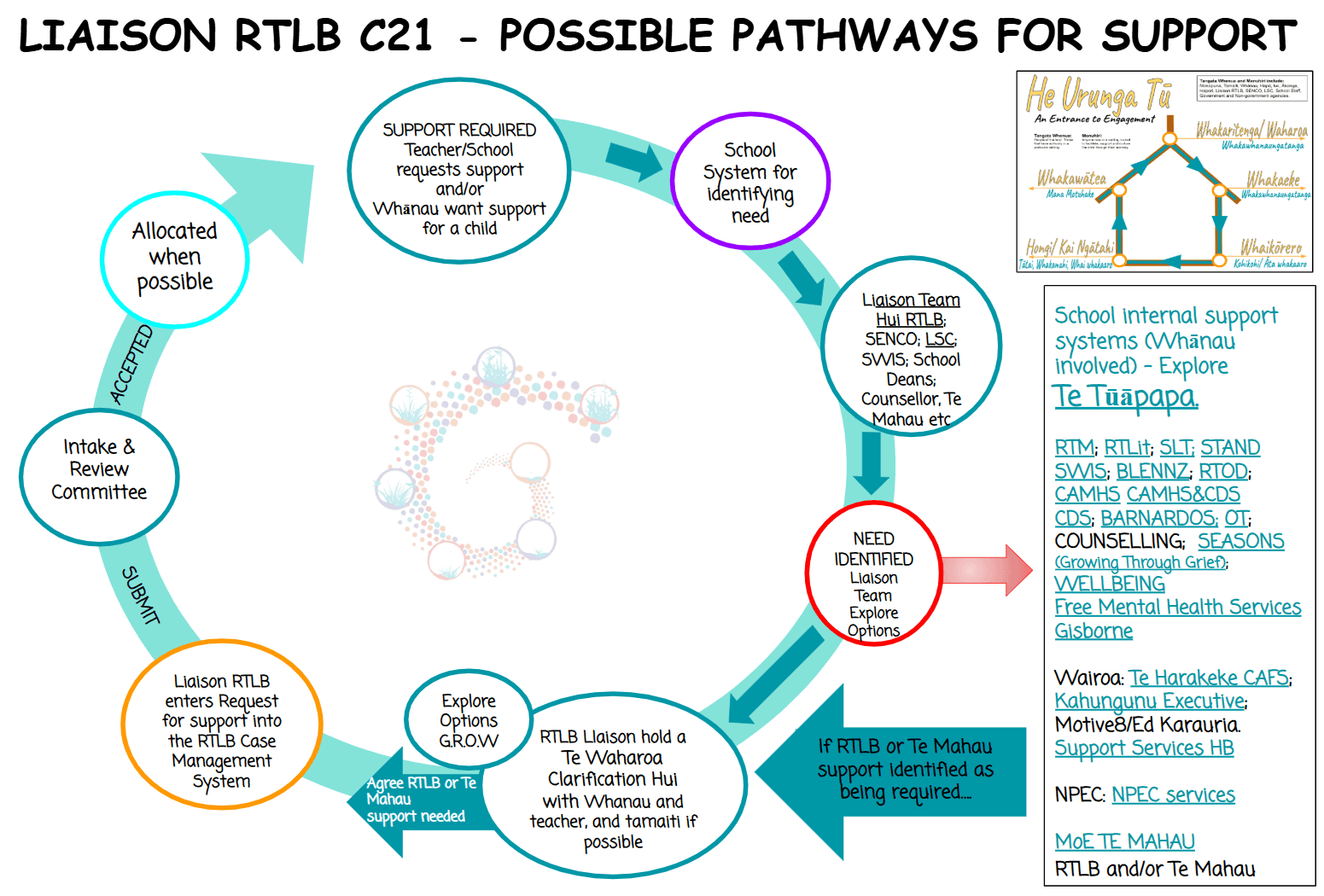
When needs are identified, Liaison RTLBs work with key people in schools to explore pathways of support using The Tūāpapa framework within He Urunga Tū and He Pikorua to support schools to identify and meet the needs of mokopuna.
Liaison RTLB have a Te Waharoa – clarification hui as our entrance to engagement within He Urunga Tū, with the classroom teacher and whānau using the GROWTH COACHING Framework to support our clarification of need.
GROWTH COACHING Framework
Relationships Building the trust | |||||
G Goals What do you need to achieve? | R Reality What is happening now? | O Options What could you do? | W Will What will you do? | T Tactics How and when will you do it? | H Habits How will you sustain your success? |
Results Celebrating the results. | |||||
Relationships Building the trust | |||||
G Goals What do you need to achieve? | |||||
R Reality What is happening now? | |||||
O Options What could you do? | |||||
W Will What will you do? | |||||
T Tactics How and when will you do it? | |||||
H Habits How will you sustain your success? | |||||
Results Celebrating the results. | |||||
If whānau and the classroom teacher(s) decide a RTLB ‘Request for Support’ is the best pathway during the Te Waharoa RTLB Liaison clarification hui, the Liaison RTLB asks them, at the hui, to sign a consent form. The Liaison RTLB enters the details of the RTLB Request for Support into the RTLB Database and submits for the RTLB Intake and Review Committee to consider. The RTLB Intake and Review Committee (including representation from Te Mahau – Ministry of Education Learning Support) meets weekly (bar once a month) on a Thursday.
03. RTLB Casework
Once a request for support has been allocated to RTLB (not necessarily the Liaison RTLB) the RTLB works collaboratively with the key people (E.g., whānau, mokopuna, and teacher) using He Pikorua.
Outcomes Framework
In the course of RTLB work, RTLB make a difference for students, teachers, schools and whānau. Outcomes data is collected at a case, cluster and national level providing evidence of the positive impact of RTLB work.
Outcomes are collaboratively measured and recorded for
Professionalism
Cluster 21 provide a professional and supportive environment through




Cultural Responsiveness
New Zealand communities are diverse with many different cultural, ethnic, religious groups. RTLB understand and respect the social and cultural influences on learning in the multi-cultural context of Aotearoa New Zealand.
They work to strengthen confidence in cultural identity and connection to parents, whānau, and school communities. RTLB work to develop positive and culturally responsive relationships with students and whanau. They use practices that adapt to learners' cultural values, knowledge and ways of learning. Cultural responsiveness places importance on cultural knowledge and understanding and the right of Māori to define, protect and promote their treasures and resources.
RTLB support the implementation of Ka Hikitia and Tataiako and the Action Plan for Pacific Education to promote successful outcomes for Māori & Pasifika students. RTLB interventions should acknowledge the family's aspirations for their child's learning through working collaboratively alongside whānau.